starting over again
an updated list of year-end rituals

To no one’s surprise, I am a creature of habit, because as I was about to list down all the things I do to conclude the year, I realized that I had already written a post like this a couple years ago. Why does no one talk about how depression causes memory loss?
023: starting over

I’ve been in limbo since the start of the holiday break, and it has a quietness that I have learned to appreciate over the years. It’s definitely the Catholic upbringing, but the last two weeks of the year have always felt like purgatory in a sense that on most days, there’s not much going on, but you know there’s something different in the air. During …
I am happy that despite not having written as much as I promised myself earlier this year, I’ve documented enough of my 20s so far to still have a lot to look back on, not just these past twelve months. I take pride in the habits I’ve listed last 2023, because these are things that I still do. Seeing how I was able to document this a long time ago makes me feel good because it goes to show that I truly know myself now, I wasn’t just thinking it.
There are new parts to my year-end ritual now, some of these habits only being cemented into my routine after numerous attempts of trial and error. 2023 Dani was right: it’s important to keep trying. To quote myself from two years ago:
What a delight it is to know myself much better now, to have a more fully-formed image of myself that I can describe in great detail all because I tried hard enough to take an interest in myself without judging right away, or not allowing myself to try because I was afraid of the consequences.
Anyway, on to the new parts of my year-end routine! Here are more things I have done in the last few days of 2025 and will include in my annual tradition from now on:
1. list and acknowledge my achievements
The ‘small wins’ cake bandwagon has got to be my favorite trend this year because even if you can debate all you want about the sincerity or truth to the achievements shared by people on social media, it still remains a great exercise in gratitude for people who bother to take this seriously. Advocates and practitioners of positive psychology assert that gratitude improves psychological wellbeing because it lessens depression and anxiety symptoms and helps people connect with others (or something greater than themselves.
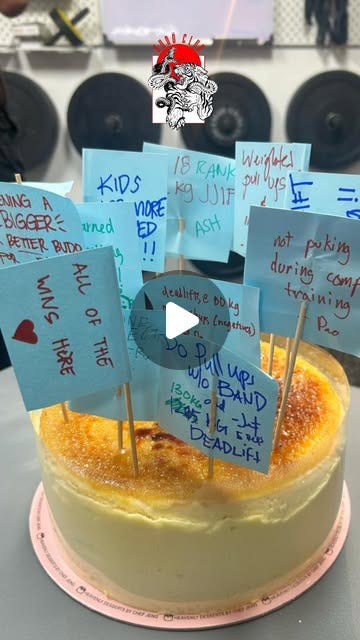
But how does one practice gratitude without thinking about how corny it all sounds? Well, it helps to remember that the human brain is not wired to seek happiness. From an evolutionary perspective, our negativity bias feels much stronger and more natural because it’s how we’ve learned to survive all these eons. So it makes sense to feel awkward about this practice of finding the good in one’s life, but like any other skill, gratitude can be learned.
One thing I’ve noticed in people who struggle to be grateful is that, the usual systemic factors aside, there are individuals who have such high standards for what constitutes an achievement that they fail to realize that the things they feel obligated to accomplish are still worth celebrating. It helps to remember that an achievement does not have to be big or grand or unique for you to truly revel in it, and just because these things you’ve achieved were expected of you (whether this was an expectation you imposed on your own or set by others) does not mean you can’t celebrate it. You have to give yourself permission to feel other emotions apart from relief!
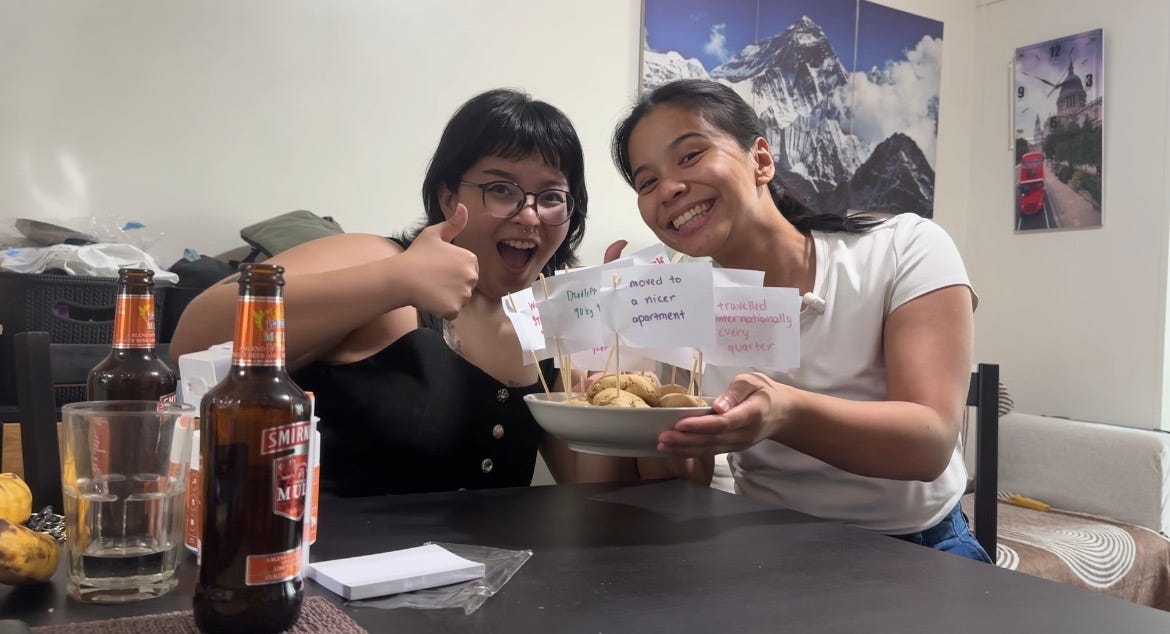
I’m happy to have done this twice, one with my found family at the gym and the second time just yesterday when I met up with one of my longest friendships from my One Direction fan account days (Nikki has a Harry follow and DMs btw. Yes, DMs). Being able to look back and think, ‘Damn, I really did that! I did that even if I was scared and uncertain and stressed out!’ can teach your brain to more easily spot and savor the good that happens to you.
2. write letters to my future selves.
I hate that everything is subscription-based now so I quit FutureMe some months ago when it began pestering me to pay up for a yearly subscription before letting me send yet another random letter into the future. I have now gone back to analog and spent the past two nights making handwritten letters to different versions of myself in the future. As of writing, I have written a birthday message and year-end message, these two letters tucked away in my bullet journal. I’m still debating on whether I should also write a letter for the mid-year, but that would be a bit too predictable and I would like to keep the magic of this ritual. I might sit on it over the weekend and maybe choose a random date that I think would be significant in the following year so that I get to sharpen my intuition, who knows.
I’ve said this before and I will never stop saying it: writing letters to the future teaches me to love myself better, because in all the years I received letters from my past self, I get to look at her with much more love and compassion. This little practice has motivated me to write more frequently to the future, not just to the end of the following year.
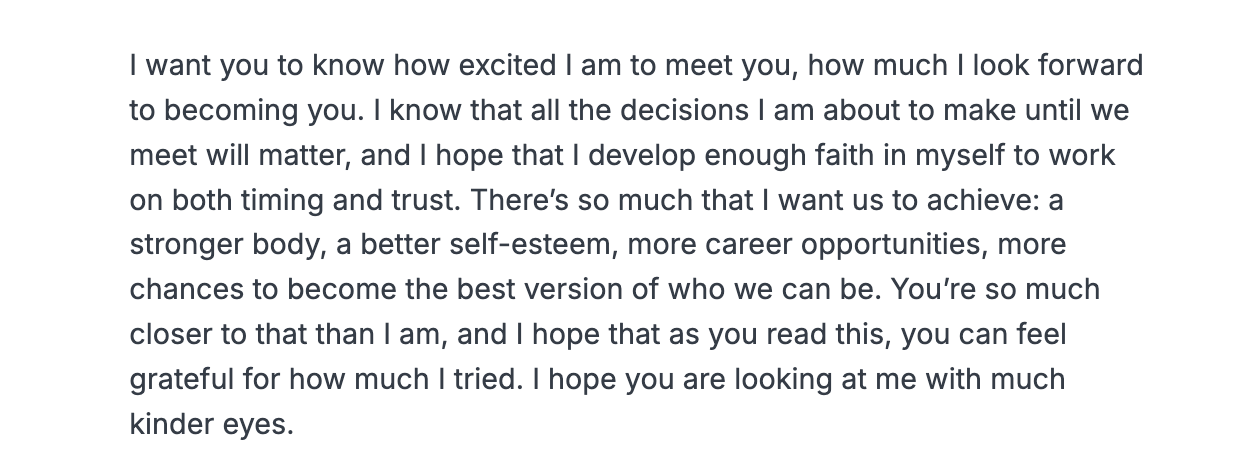
This is typically my format in my letters to the future:
✨ Where are you right now and how are you feeling?
✨ What are your current fears and worries? Dreams and aspirations?
✨ What do you think your future self needs to remember?
✨ What kind of assurance can you give to your future self in case things aren’t working out as planned?


3. conduct an audit of my habits.
Not to be a LinkedIn dudebro, but if there’s anything useful I got from my old teaching job that wasn’t traumatizing, it was how they structured their post-activity evaluation forms. Besides asking to rate different aspects of the event, there was always a portion where you could write feedback on what things they could start/stop/continue doing to improve future activities. I figured I’d adopt this evaluation framework to better think about my habits.
I was up all night last night looking back on how I’ve shown up for myself this year and in what other ways I could have done things better. Without oversharing my habits, I was able to find themes in each category. I want to stop any form of mindless consumption and to start being more intentional about how I spend my days, because how you spend your days is how you live your life, and I want to continue engaging in activities that push me to do better. I really want to have more tangible and less digital hobbies, to touch grass more than I scroll endlessly on multiple apps. This audit has also helped me clarify what kind of goals I would like to pursue in the coming year, allowing me to identify the little things I could modify each day to make these big goals feel less intimidating.
011: romanticizing damage

As this year comes to an end, I have begun to engage in a bit more mindful self-reflection. I find it therapeutic to do a little purge by the twelfth month in the hope of making my life look like a clean slate. I know that the calendar tries to maintain this structure that doesn’t really exist, and as soon as the clock strikes 12 by the end of December …
I am very excited for the year ahead. I may not have the childlike excitement that I used to welcome the new year with, but I have grown through enough pains to learn that change is a good thing. When things change, these are repeated chances to experience the same things in a different light, hopefully with more zest and wisdom. I will probably spend the next December writing another post like this but there will be new things to unpack, just like how my girl friends and I won’t stop beating a dead horse that died years ago. To inaccurately quote peopleWatching, I can’t possibly write the exact same thing every year, because the woman that I am at this age has never done anything like this since it’s never been now before.
Happy, happy new year, friends! I hope you get everything you want and more.